Background
Albanian weddings and the Kanun
The wedding customs behind the show, the oda and the idea of besa, and what the Kanun is and is not, from encyclopedic and tourism sources.
Hold a place at the show ↗A wedding is a community event
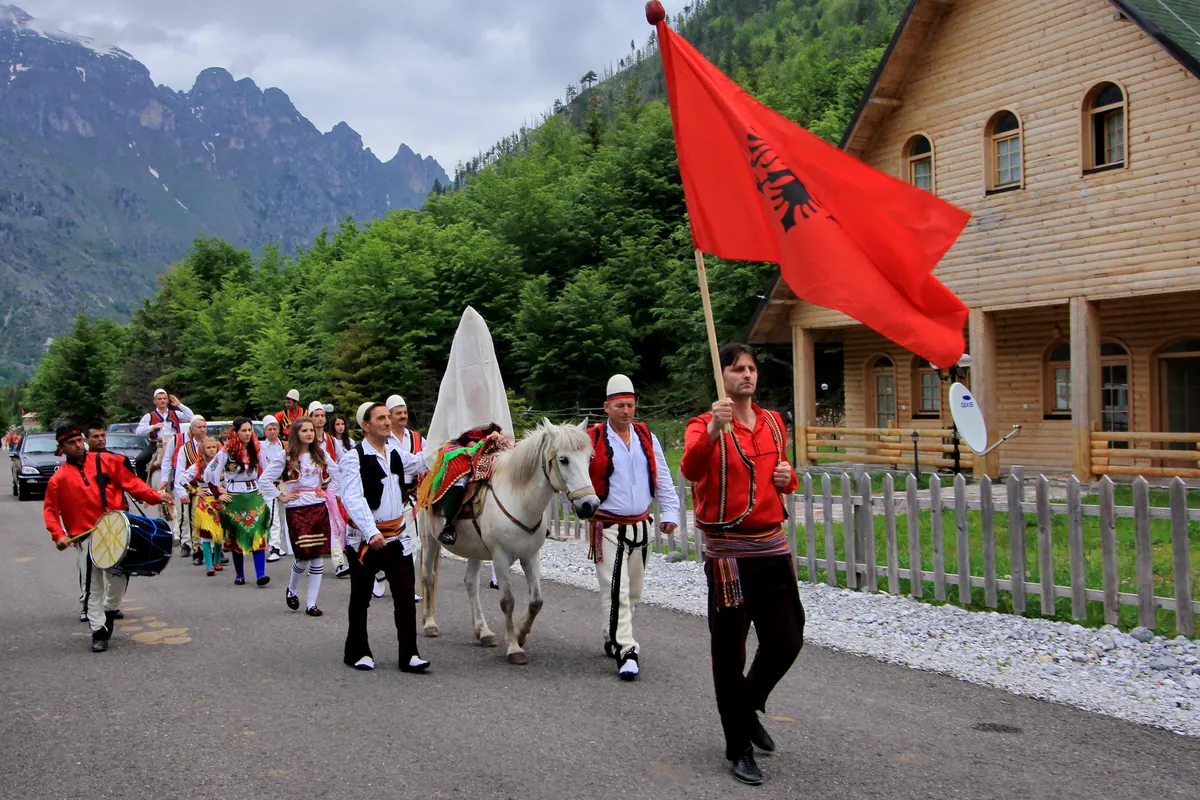
Tirana's tourism office says Albanian weddings have numerous rituals and can last almost a month, involving the whole community, known and unknown people alike. It adds that many traditions no longer continue and that weddings have modernised. That framing helps with a staged evening: Albanian Night does not claim to document a modern wedding, it condenses older customs into a story guests can step into, with dress, music and dance doing the explaining. It also means the evening is a good prompt for questions, because the hosts will know which customs belong to which region.
Gifts and dowry
Wikipedia's article on Albanian culture records two customs. A few days before the wedding, the groom's family sent gifts called dhuntia to the bride, including clothing, jewellery and gold ornaments. The bride's family prepared the paja, the goods parents give a daughter for her new home. Dress varied by faith and place. The painting Wedding in Shkodra from 1924 by Kolë Idromeno shows the tradition, and the costume guide on this site goes further into bridal dress.
The oda and hospitality
In traditional homes the oda was the large room where hosts received guests. Wikipedia says that until the end of the twentieth century women and young boys were not allowed into it, and that men there discussed politics and sang epic songs. The same article describes besa, to keep the promise, as the Albanian code of honour, including caring for those in need and welcoming every person as a guest. The venue's recreated village house borrows the idea of the room as its stage, which is why the show feels like being received as a guest rather than watching from a distance.
What the Kanun is
The Kanun is a body of customary law that elders kept alive orally for centuries. It is named after Lekë Dukagjini, though Wikipedia says the attribution is disputed. Shtjefën Gjeçovi wrote it down, partly published in 1913 and in full in 1933. His version has twelve books, covering subjects from the church, family and marriage to honour and damages. It rests on four pillars: honour, hospitality, right conduct and loyalty to kin. It applies to Christian and Muslim Albanians, with regional variants, and Wikipedia notes an earlier written codification of the oral law, published by the Ottoman administration in Prizren in 1872.
The blood-feud question
Part of the Kanun, in its book on murder, has been linked to blood feuds, which Wikipedia describes as following the principle of a head for a head. The communist government suppressed these practices, and the article says they reappeared after the 1990s; estimates of the numbers vary widely. That is a real part of the history, but it is a small part of a larger text about hospitality and family obligations, and it is not what a visitor to a folk evening is asked to watch.
What has changed
Tirana's tourism office is frank that much of this has faded. Many traditions no longer continue today and weddings have become modernised, and funeral songs are disappearing as families gather more quietly around the deceased. That is the argument for an evening like Albanian Night: it gathers the dances, songs and customs of several regions into one room, so you can see how a wedding looked and sounded without needing to be invited to a village.
How the show uses it
The venue describes the evening as an invitation to dress as a village resident and step into the world of the Kanun, which it presents as the code that shaped social hierarchies, family relations and the rule of law in northern Albania. Treat that as a theatrical frame. The wedding is symbolic, the roles are played, and the hosts are there to answer questions about customs, so ask them about any custom you want explained.
Sources